
Stop 15: The Parks
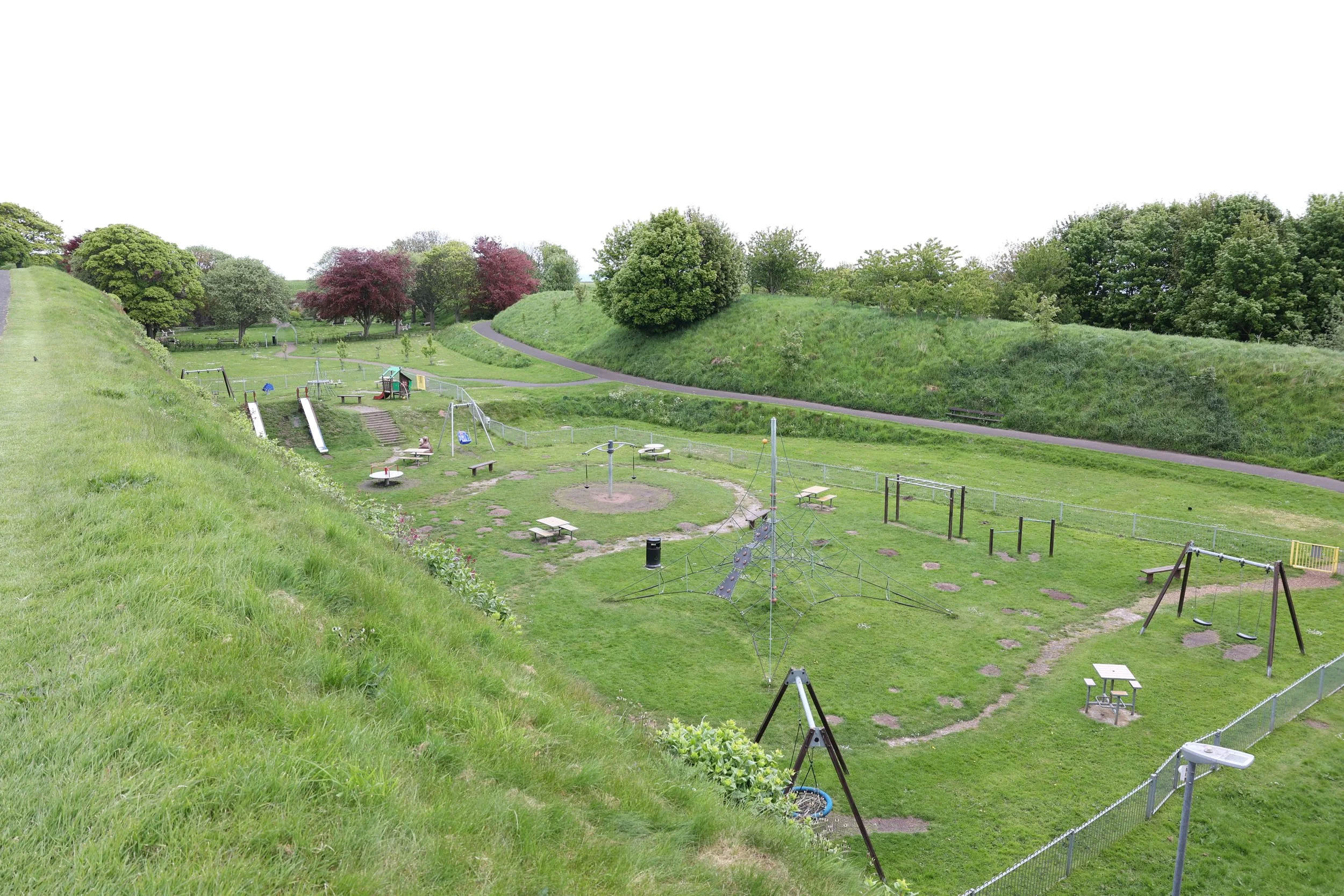
Flagstaff Park
The area known as Flagstaff Park would have originally formed part of Berwick’s defences and it is sandwiches between the Medieval Walls and the Elizabethan Ramparts.
The Lions Stairs which lead from the walls and Flagstaff Park itself were officially opened in July 1896. The Stairs formed an important thoroughfare to parts of the Town ouside the Walls such as Devon Terrace and the Pier Field.
The land was originally leased from the Freemen Trustees but was purchased by the Town Council in 1930 for £1000.
Concerts and other open air events were held in the Park in the 1920s/1930s and the area was seen very much as part of Berwick’s offer for leisure and tourism.
In September 1926 Berwick Whippet Club even asked for permission to race their dogs in the Park but the request was refused!
The Rose Gardens
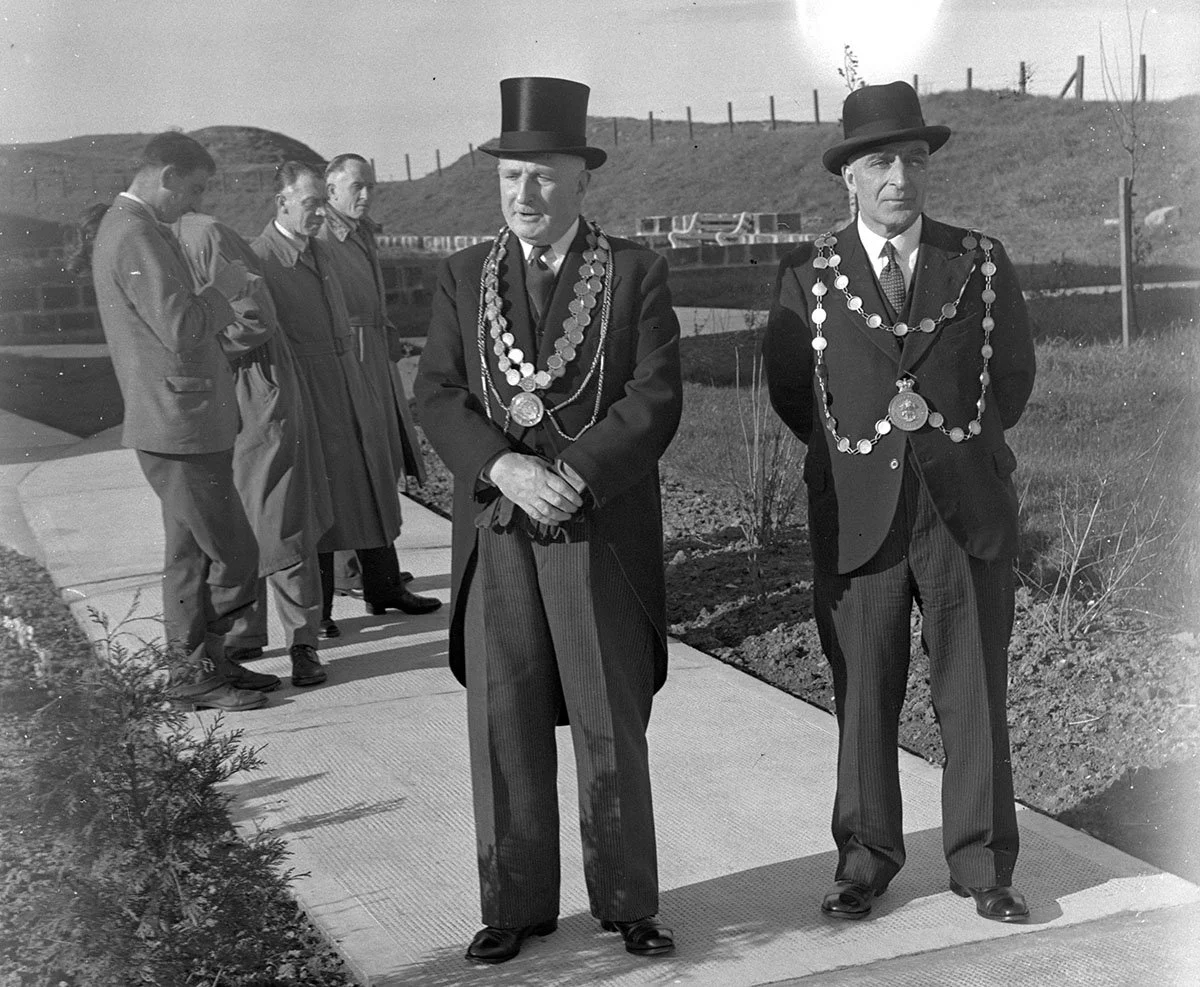
Although Flagstaff Park had been long established, the Rose Gardens were laid out to commemorate the coronation of Queen Elizabeth II in 1953. Here we see the Mayor, Alderman George Manners Lamb and Sheriff, David Storar at the opening of the gardens.
Here is a view of the gardens a few years later in the 1950s when they are beginning to become established. The KOSB and the Girl Guides amongst other groups had donated trees and sponsored rose beds.
As well as modern day flora and fauna being on show in the gardens if you look closely you can look back to prehistoric times. There are tiny Crinoids captured in the stones used to build the walls and these are particularly visible in the area around the Rose Gardens.
Crinoids were marine invertebrates which lived on the seabed some 500 million years ago. Their fossils can be seen here in the stone used to build the walls. They can also be found on beaches locally and are known as Cuddy’s Beads.