
Stop 17: Windmill Bastion
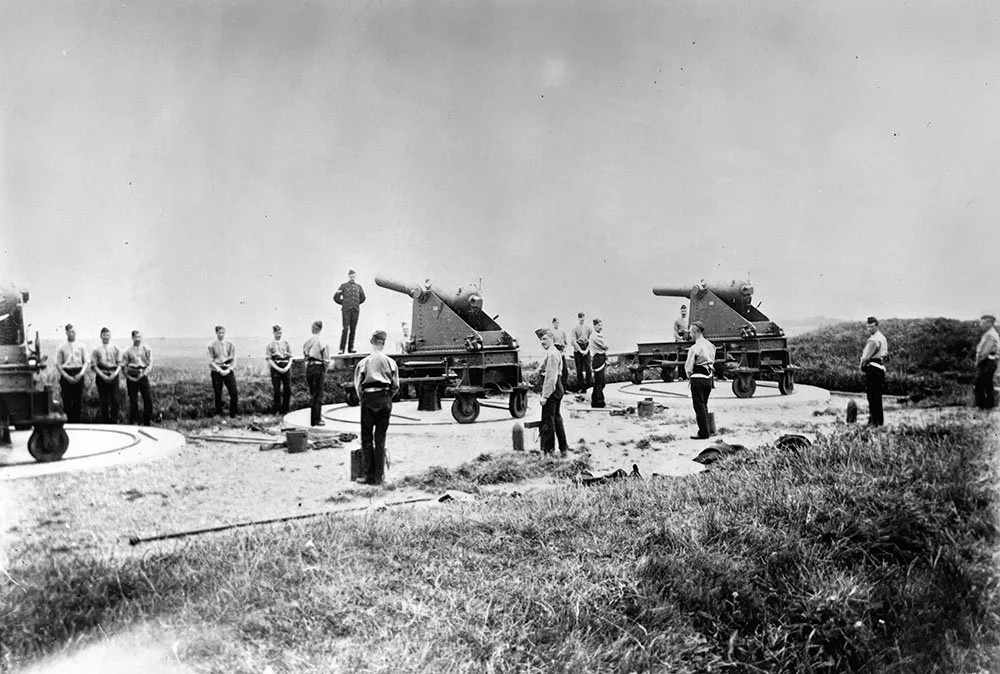
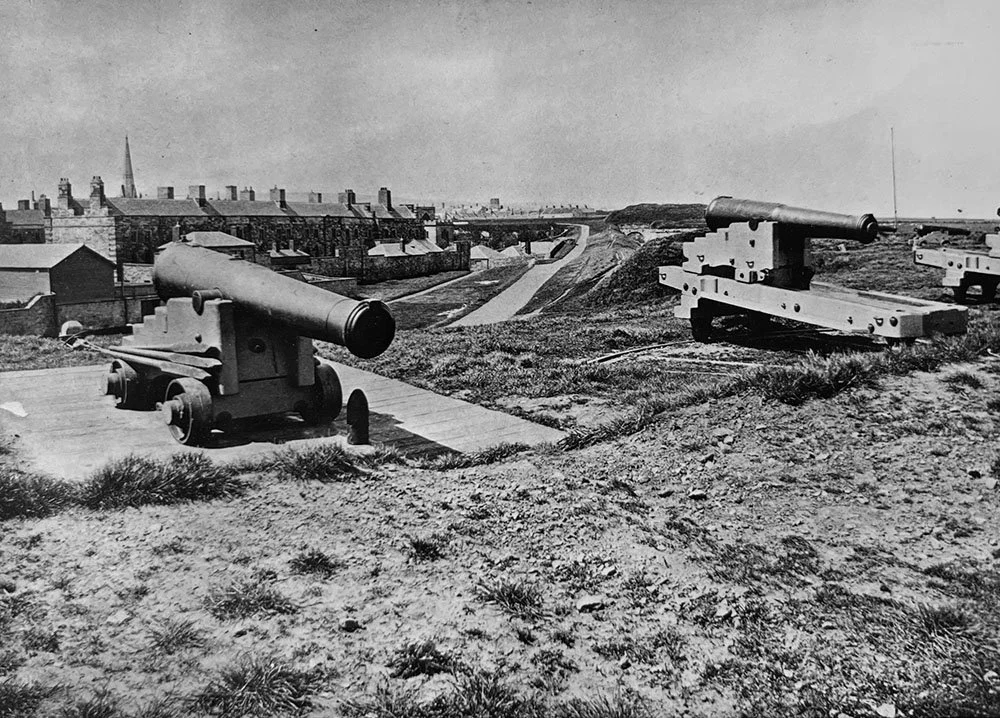
In addition to the Elizabethan defences at Windmill Bastion, you can also see there is also a series of unusual concrete and stone circles, rectangles and semi circles. These are of various ages but all served one purpose. They were gun emplacements.
In 1860, the 1st Berwick-upon-Tweed Volunteer Artillery was formed as part of as nationwide wave of volunteer militia founding. They met 3 or 4 nights a week and had to attend annual camp at Tynemouth, Goswick or Scarborough. If they did not attend they had to pay a fine.
The initial battery for the Artillery was at Fisher’s Fort, where the Russian Gun is today. On 24th September 1861 they held a practice there where they fired at two targets anchored just south of Spittal Point with their line of fire being directly over the mouth of the Tweed.
In 1873 their artillery pieces were installed at Windmill Bastion, giving us the first of our unusual installations as seen here. Some of the bases were added later, the newest being those put in place during the second world war to house a battery of anti-aircraft guns which needed a 360-degree field of fire.
The volunteer artillery also used the area outside the Barracks walls for practice and presumably the gateway from the barracks (now blocked up) would have given access to ammunition stores and equipment. The doorway is still visible in the stonework today.
Volunteer groups such as the artillery became part of the Territorial in 1908 and eventually became what we now know as the Territorial Army in 1921.
During the Secodn World War more of these implacements were added to house a battery of anti aircraft guns.