
Stop 2: The Stanks
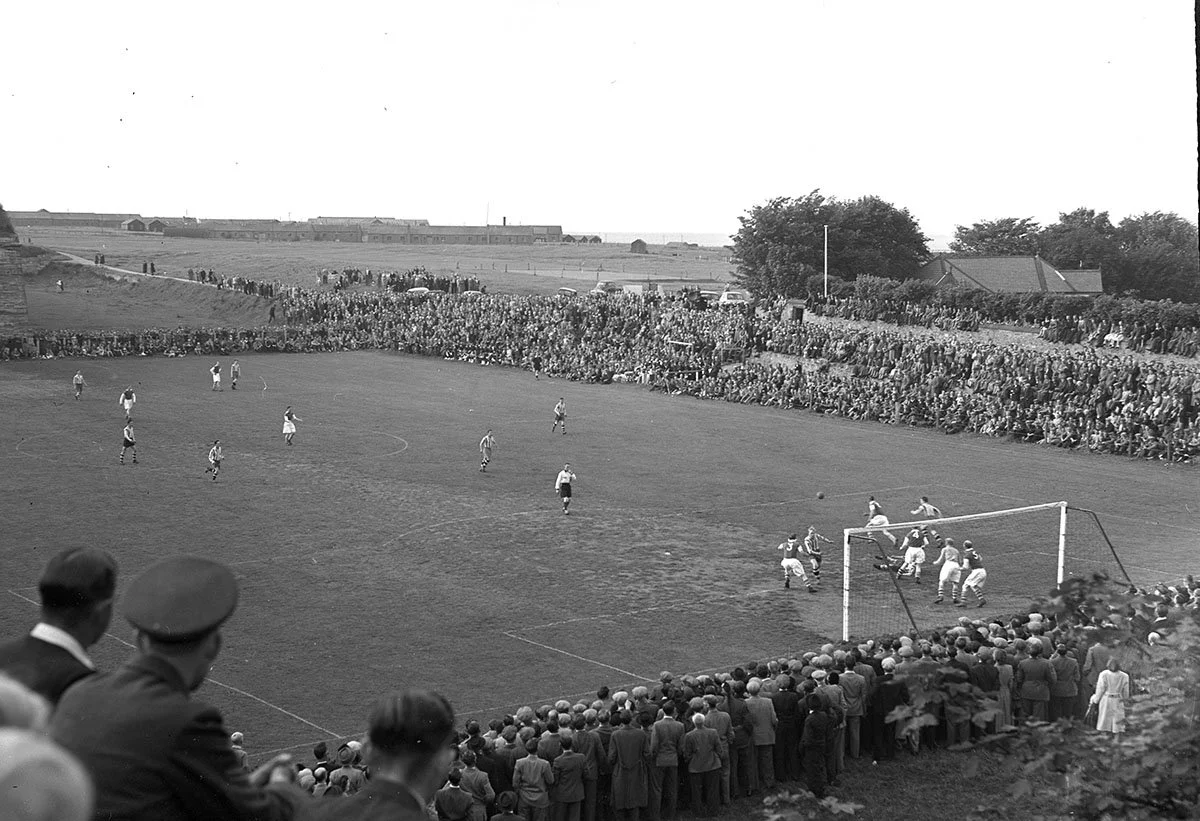
Football:
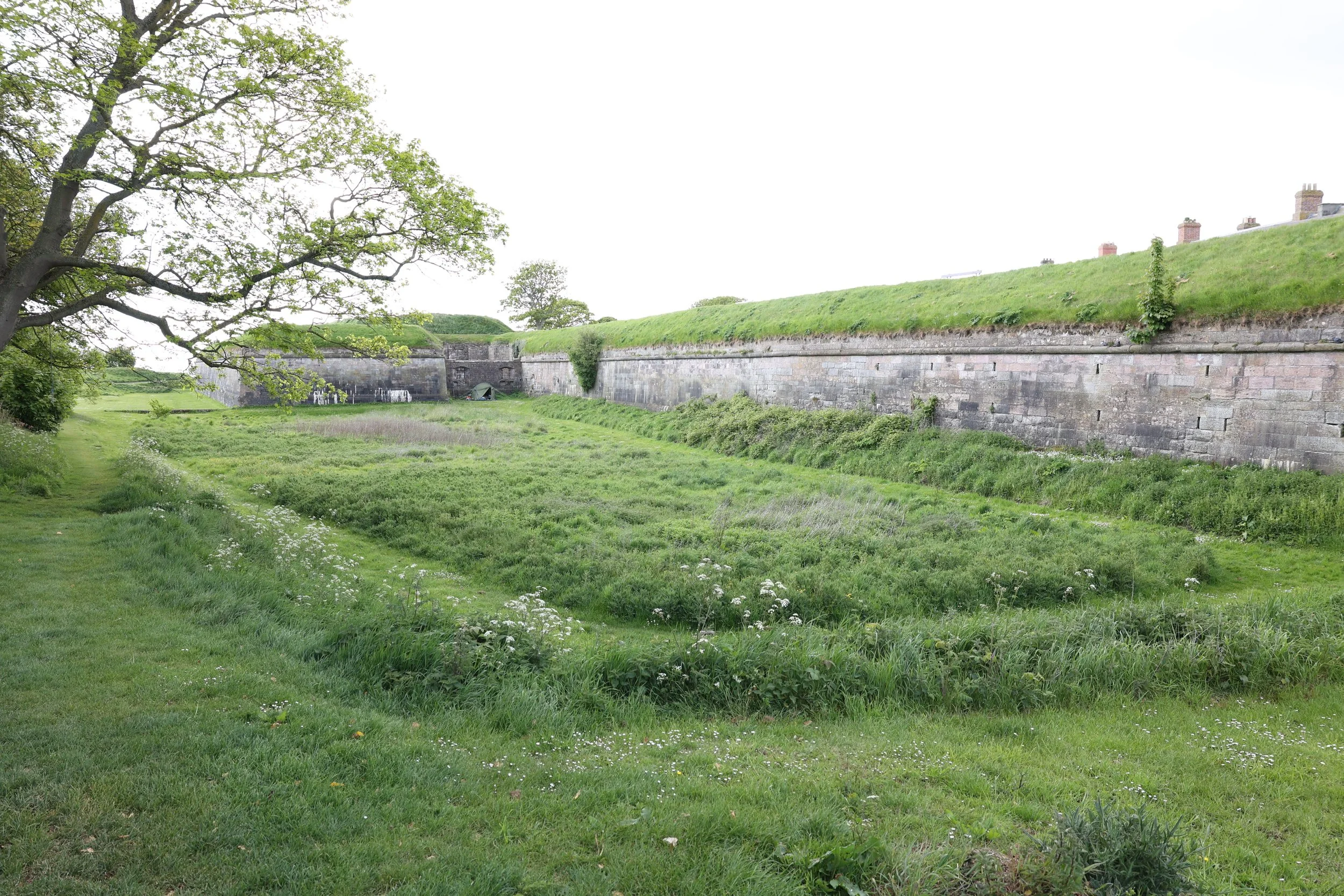
The name ‘Stanks’ is a Scottish word meaning pond.
The area would originally have been part of Berwick’s defences and would have been filled with water, like a moat.
As you go through the Cowport from Berwick, the land to the left hand side has for many years been used for various sporting activities.
In 1922, a series of football matches were held annually raising money for charity. Local amateur teams competed from both sides of the border. The ‘Infirmary Cup’ as it was originally known raised money for Berwick Infirmary in a pre-NHS world. After 1948 and the introduction of the NHS, its name was changed to the Charities Cup to support a wider range of charities in the area.
The collection in 1948 was allocated to the Flood Distress Fund (after 1947’s horrific flooding in this area), a garden of remembrance and Berwick Pipe Band to name but a few.
Skating:
Believe it or not, the part of the Stanks to the right was once used for ice skating!
Winters must have been colder in the 19th century.
We know from newspapers that there was an ice rink here from at least 1875. Skating continued here until at least 1925.
Berwick even had its own Ice Skating Club ? In 1875, there was an advert in the local newspaper stating that the pond was open to non members on new years day with an admission of 1s 6d.
In 1893, they applied for permission to build a small concrete wall at the end to stop the water draining out. If you look closely you can still see these walls in place today
The Skating Club was eventually wound up in 1903.
Ready…aim…FIRE!
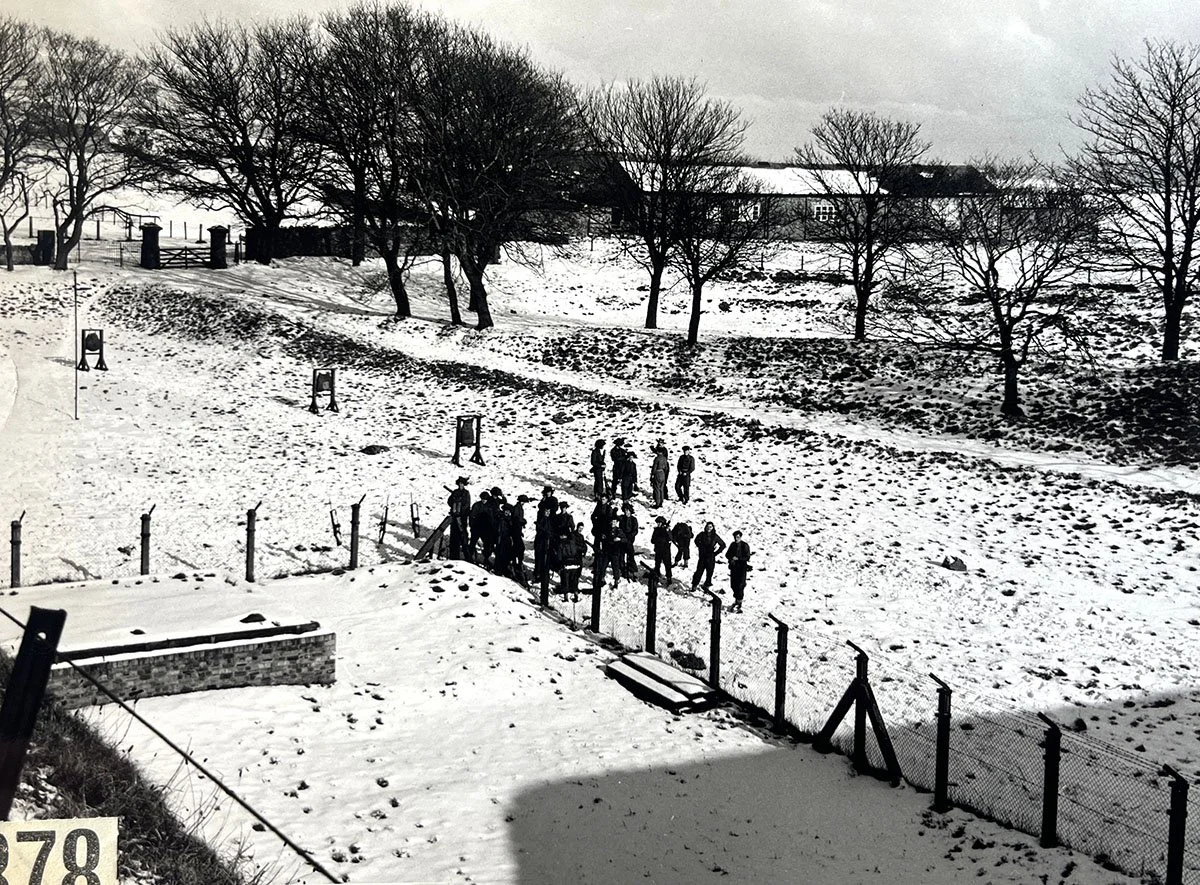
By 1903, winters had obviously become less reliably cold and sometime after, possibly around the time of the first world war, the ice rink had given way to a military firing range for small arms, rifles and machine guns. Obviously with the Barracks being within the walls they needed somewhere less confined to teach new recruits how to shoot and this location was chosen.
Here we see some recruits in the snow in the late 1950s, some in full battle gear. You can see a series of hanging hessian sacks which would be for bayonet practice. The building in the background was an indoor firing range.
A wall was built in front of Windmill Bastion to protect it from the onslaught of fire. Presumably earth would be banked up against the far side to take the impact of the bullets.