Stop 4: Scotsgate
The think with a tour of the walls is there’s just so much to see. You can look out of the walls and you can look inwards towards the town itself.
At the Scotsgate it’s important to do both!
Outside…
To begin with we'll look over the wall towards Castlegate and the road to Scotland.
In the past, the Scotsgate would have been the same width as Cowport with heavy gates. These would be locked every night to protect the inhabitants.
Queen Victoria’s Jubilee Fountain:
This grand marble fountain a gift to the town by Commander F. M. Norman. He was a retired Naval Captain who settled in berwick in 1877. He became highly involved in the life of the Town serving as Mayor in 1888 and 1890. He was also very interested in history and wrote a small guidebook about the Walls.
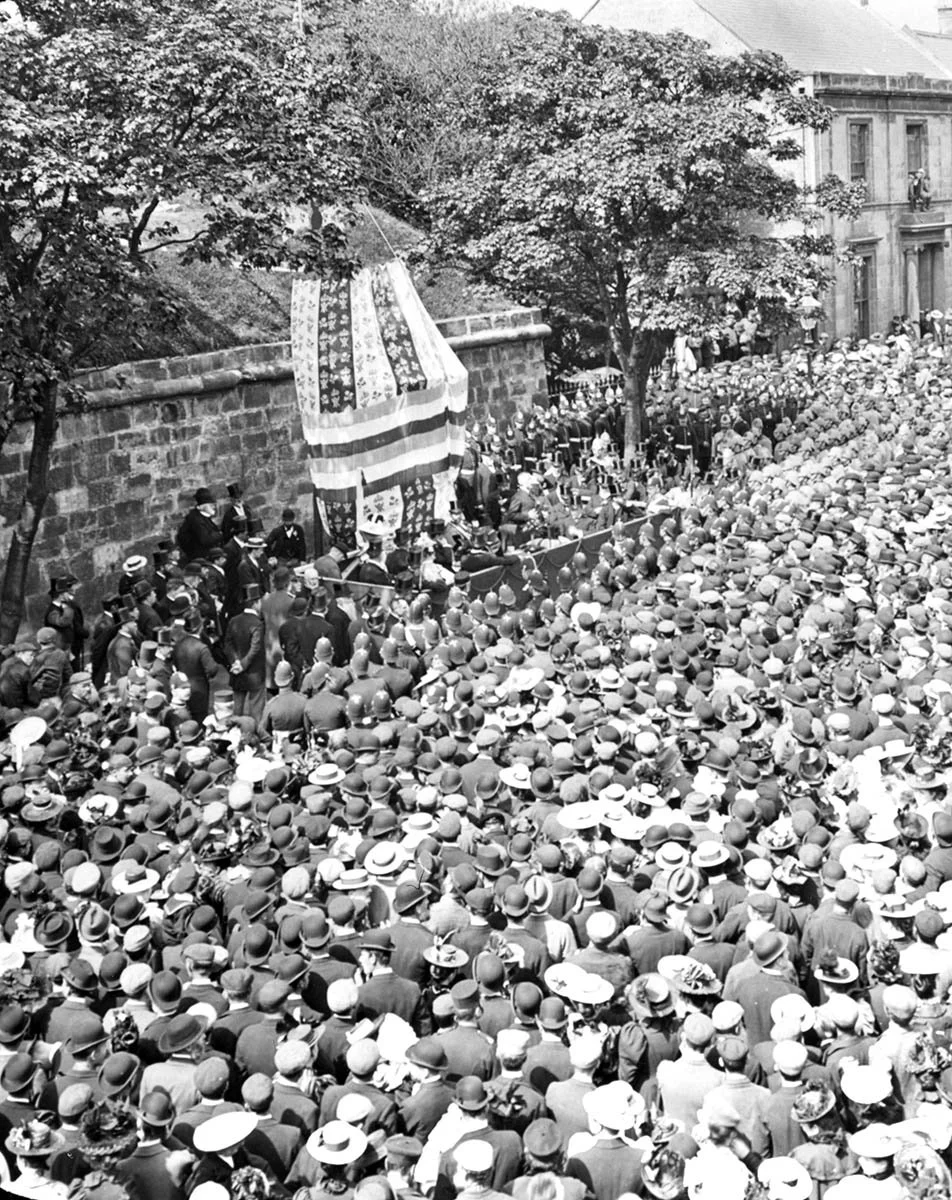
The fountain was unveiled on 20th June 1897 by Sir Edward Grey, Berwick’s MP at the time. The ceremony took place at 10.30am after a procession from the Town Hall.
Queen Victoria’s Diamond Jubilee was a massive event across the whole country. In Berwick, all manner of events were held including sports, dances and picnics.
The fountain no longer supplies water but you can still see the lion masks where the water would have originally come from.
(Image: Crowds watch the unveiling of the fountain)
Inside…
Look out for small details:
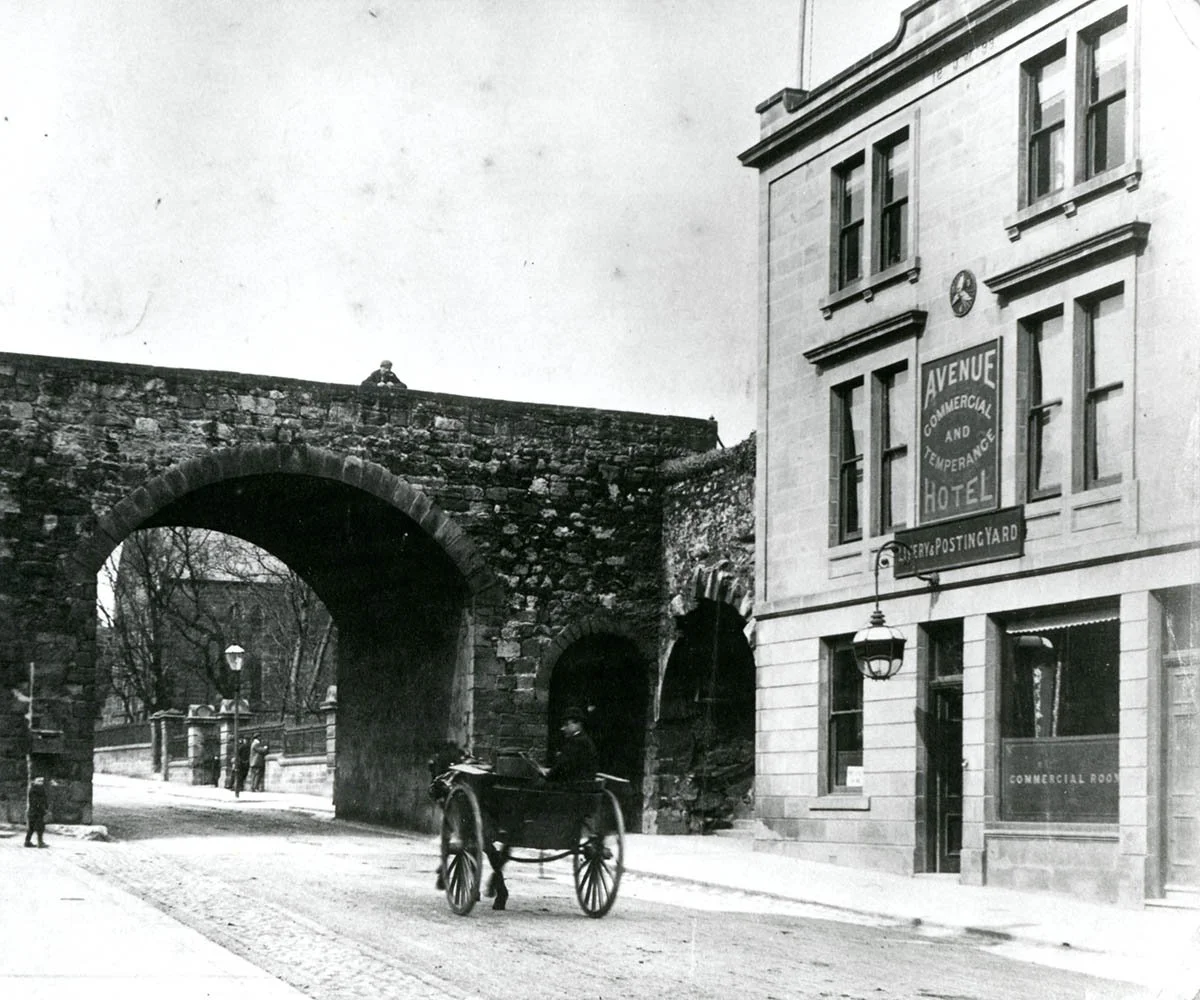
Small details are so easy to miss. Take 124 Marygate for instance. The imposing Victorian structure replaced this much earlier building. To the left we see the Cockle Steps leading to Greenside Avenue and the Walls.
The original structure was razed to the ground in 1898 in efforts to gentrify the High Street. The new building became the Avenue, Commercial and Temperance Hotel, with stables at the rear. Its owner and builder was so proud of his work that he included his initials and the date of constriction on the façade. The JW standing for Joseph Weatherston.
Weatherston was a well respected member of the community being a councillor and Mayor. This had been the headquarters of his builders business. In 1881 he employed 12 men and four boys. Here he is with some of his workers.
He died in 1910 leaving and estate worth around ½ million pounds in today’s money.
If we look at the centre of the building we also see a round metal plaque. This is a rare survivor from the building’s days as a hotel when it welcomed cyclists. This plaque showed it was a recommended stop by the Cyclists’ Touring Club.